View article without comments
FEMA continutes to kill; City in dire need of mental health facilities
by by way of Tracie Washington and others
Thursday, Jun. 05, 2008 at 12:19 PM
Death of FEMA trailer resident could have been averted if the police had simply left the scene (or visible presence)...
An even larger issue looms in the backdrop of this story � mental health crisis.
Katrina because of the failure of insurance, road home, etc.

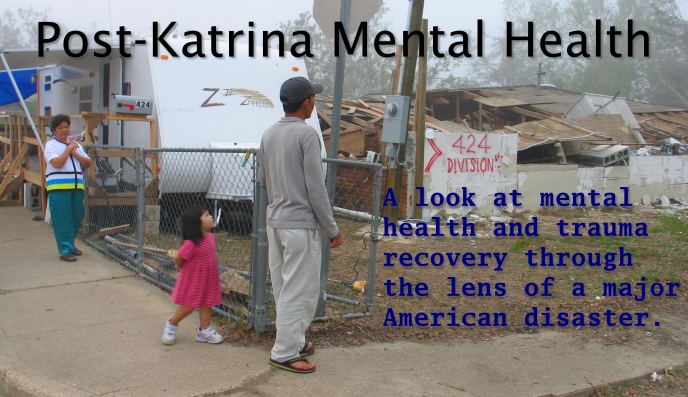
blog_header2.jpg, image/jpeg, 688x397
On August 28, 2005, Eric Minshew�s life was relatively normal. He was just the guy next door, and could have been the guy next door in any community, in any state, anywhere in this country. But Hurricane Katrina and our governments� failures in its aftermath took away Mr. Minshew�s ability to live with dignity and respect, his mental capacity, and then his life. We learned this morning that Mr. Minshew died, having been fatally wounded by New Orleans police after a standoff instigated by FEMA workers who tried to �evict� Mr. Minshew from his FEMA trailer.
Yes, that�s right, you�ve heard correctly. Someone was killed because FEMA officials believe the toxic tin boxes it has stored Gulf Coast residents in are worth a life.
My outrage over the senselessness of this all is palpable � I can taste it with every swallow. Why couldn�t they just leave Mr. Minshew the hell alone?! This man�s choice is the choice faced by thousands of FEMA trailer residents: stay in the formaldehyde laden home or become homeless (don�t buy the FEMA hype; it�s 30-day only hotel voucher alternative to the trailer is not a substitute for permanent housing).
FEMA must be held accountable for this madness. LJI Staff Attorney Lauren Bartlett has written an incredible blog entry for us at http://www.JusticeRoars.org. Write a comment; let us know you�re angry, or confused, or frustrated, or simply feeling sympathy for Mr. Minshew�s family.
Write any elected representative you know. Folks, the summers are long and hot here. This story could replicate again and again, because FEMA officials seem to just get dumber by the day. FEMA trailer residents need your help.
Do more than you think you can.
______________________________________-
http://www.nola.com/news/index.ssf/2008/06/man_in_standoff_is_shot_dead_b.html
SOME THOUGHTS ON RECENT RELATED ARTICLES IN LOCAL AND NATIONAL PRESS:
We all know that the Hurricane and its aftermath continue to take its toll, with a visible increase in homelessness, doubled incidents of mental illness and off-the-charts stress levels. An April 30, Times Picayune article says that mental health is as large of an issue now as it was immediately after the levee broke. Two thirds of residents surveyed said they couldn�t name a single group to go to for mental health and counseling resources and �it is past time for getting resources to those in need.� We all must demand more health resources and not be ashamed to talk about these overwhelming needs of our community.
_________________________________________
REPRINTED FROM OTHER NEWS SOURCES (SOURCES CREDITED)
New Orleans' homeless rate swells to 1 in 25
By Rick Jervis, USA TODAY
NEW ORLEANS -- The homeless population of New Orleans since Hurricane Katrina has reached unprecedented levels for a U.S. city: one in 25 residents.
An estimated 12,000 homeless accounts for 4% of New Orleans' estimated population of 302,000, according to the homeless advocacy group UNITY of Greater New Orleans. The number is nearly double the pre-Katrina homeless count, the group says.
'ROUGH GOING': Homeless still feeling Katrina's wrath
The New Orleans' rate is more than four times that of most U.S. cities, which have homeless populations of under 1%, said Michael Stoops, executive director of the Washington-based National Coalition for the Homeless. The cities with homeless rates closest to that of New Orleans are Atlanta (1.4%) and Washington (0.95%), he said.
A USA TODAY 2005 survey of 460 localities showed one in 400 Americans on average were homeless.
New Orleans Mayor Ray Nagin appealed to federal lawmakers this past week to provide funds and housing vouchers to help the city's homeless problem.
The percentage of New Orleans' homeless is one of the highest recorded since U.S. housing officials began tracking homelessness in the mid-1980s, said Dennis Culhane, a University of Pennsylvania professor who has studied homeless trends for more than 20 years.
"In a modern urban U.S. city, we've never seen it," he said of New Orleans' homeless rate.
Many of the homeless are Katrina evacuees who returned to unaffordable rents or who slipped through the cracks of the federal system designed to provide temporary housing after the storm, said Mike Miller, UNITY's director of supportive housing placement.
There are also out-of-state workers who came for the post-Katrina rebuilding boom but lost their jobs, and mentally ill residents in need of services and medication, he said. Many of the city's outreach homeless centers and public mental health services have been closed since Katrina.
Nagin has pledged to move the homeless from encampments around the city to more permanent shelters. Last year, the city and humanitarian groups found shelter for nearly all of the 250 people living in an encampment across from City Hall.
Nagin has suggested reinstating a city ordinance that would make it illegal to sleep in public places. Homeless advocates say the law would just crowd the jails.
"It just shows a real disconnect" between the city and the problem, said James Perry, head of the Greater New Orleans Fair Housing Action Center. "The answer is not going to be jails."
www.JusticeRoars.org
Credit: LJI
by by way of Tracie Washington and others
Thursday, Jun. 05, 2008 at 12:19 PM

justice_roars_announcement.jpg, image/jpeg, 243x400
www.JusticeRoars.org
Credit: LJI
by by way of Tracie Washington and others
Thursday, Jun. 05, 2008 at 12:19 PM

housing1.jpg, image/jpeg, 300x225
www.JusticeRoars.org
Stress, fear of Homelessness a volatile mix
by Laruren E. Bartlett
Sunday, Jun. 08, 2008 at 12:40 AM
FROM TIMES-PICAYUNE
Saturday, June 07, 2008
Stress, fear of homelessness are a volatile mix
Re: "Trailers in N.O. must go by July 1," Page 1, June 6.
Early Wednesday morning, Eric Minshew was fatally shot after a standoff
which began when he ordered FEMA workers to leave his trailer outside
his gutted house in Lakeview. I have deep sympathy for Mr. Minshew, as
well as his family and friends. I am immensely saddened and wish that
the severe housing and health crisis on the Gulf Coast did not have to
come to this. But I cannot say that I am surprised.
Last week FEMA announced that approximately 23,000 families are still
living in FEMA trailers across the Gulf Coast. Those Gulf Coast
residents in FEMA trailers are more than desperate, as are the thousands
of displaced residents left homeless after being denied further FEMA
assistance. The fear of homelessness, combined with extremely high
levels of stress, worsening mental illness and lack of mental health
services, makes this situation volatile.
A few days ago I had to advise a grandmother living with her nine
children and grandchildren in a FEMA trailer at Renaissance Village to
take a 30-day hotel voucher from FEMA to avoid a standoff and further
anguish for her family. The grandchildren had developed health problems
since moving into the trailer.
FEMA had already told her that it would not pay her rental assistance.
She knew that after she went into the hotel she would have 30 days, and
then she and her family would be homeless. She had no money to pay for
food while she was in the hotel, and would not have access to the
Catholic Charities, health services and transportation that has been
provided to residents at Renaissance Village.
What kind of country is this, where we force grandmothers to make a
decision between a toxic tin box and homelessness? What would you
decide?
As FEMA continues to push these residents out of their trailers and off
FEMA assistance, people only become more desperate. As residents and
advocates, we are all in agreement: We fear the worse is yet to come.
Lauren E. Bartlett
Staff Attorney
Louisiana Justice Institute
New Orleans
_____________________________
SUN HERALD
Sunday, June 01, 2008
Headline falsely suggests a life of catered luxury
We were deeply disappointed to read the Sun Herald's May 30 headline
"FEMA moving some to hotels, paying for catered meals."
While it's true that families moved to hotels have packaged meals
delivered at 6 a.m. and 6 p.m. each day, the article fails to explain
why: hotel rooms do not have kitchens, a refrigerator, a stove or even a
microwave.
People are in hotels because of failed policies: FEMA's failure to
safely house displaced people; Mississippi's failure to prioritize and
build affordable apartments; and local governments' failure to permit
affordable housing. This hotel plan is the housing of last resort.
We appreciate FEMA recognizing that families with no place to go,
relocated into rooms about the same size as FEMA trailers but without
any ability to store groceries or heat soup, has a duty to assist
families to eat during this difficult transition time. We believe the
Sun Herald should have recognized and reported this fact, instead of
using a headline that falsely suggests a life of luxury and ease awaits
these formaldehyde-poisoned, displaced, and disrespected Mississippians.
JOHN JOPLING
REILLY MORSE
CRYSTAL UTLEY
KAREN LASH
ANNETTE HOLLOWELL
Mississippi Center for Justice
Neworleans.indymedia.org
by clinton
Tuesday, Aug. 26, 2008 at 12:35 AM
clinton.hel@gmail.com 0013614069467
New orleans Indy media is also one of the story writing to the story. In this we colllect so many of poor people's daily life how to thy leave his life.
====================================
clinton
[urlhttp://www.drugaddiction.net/washington]Washington Drug Addiction[/url]
|